


8 Best Corporate Cards for Startups with No Credit History in 2026
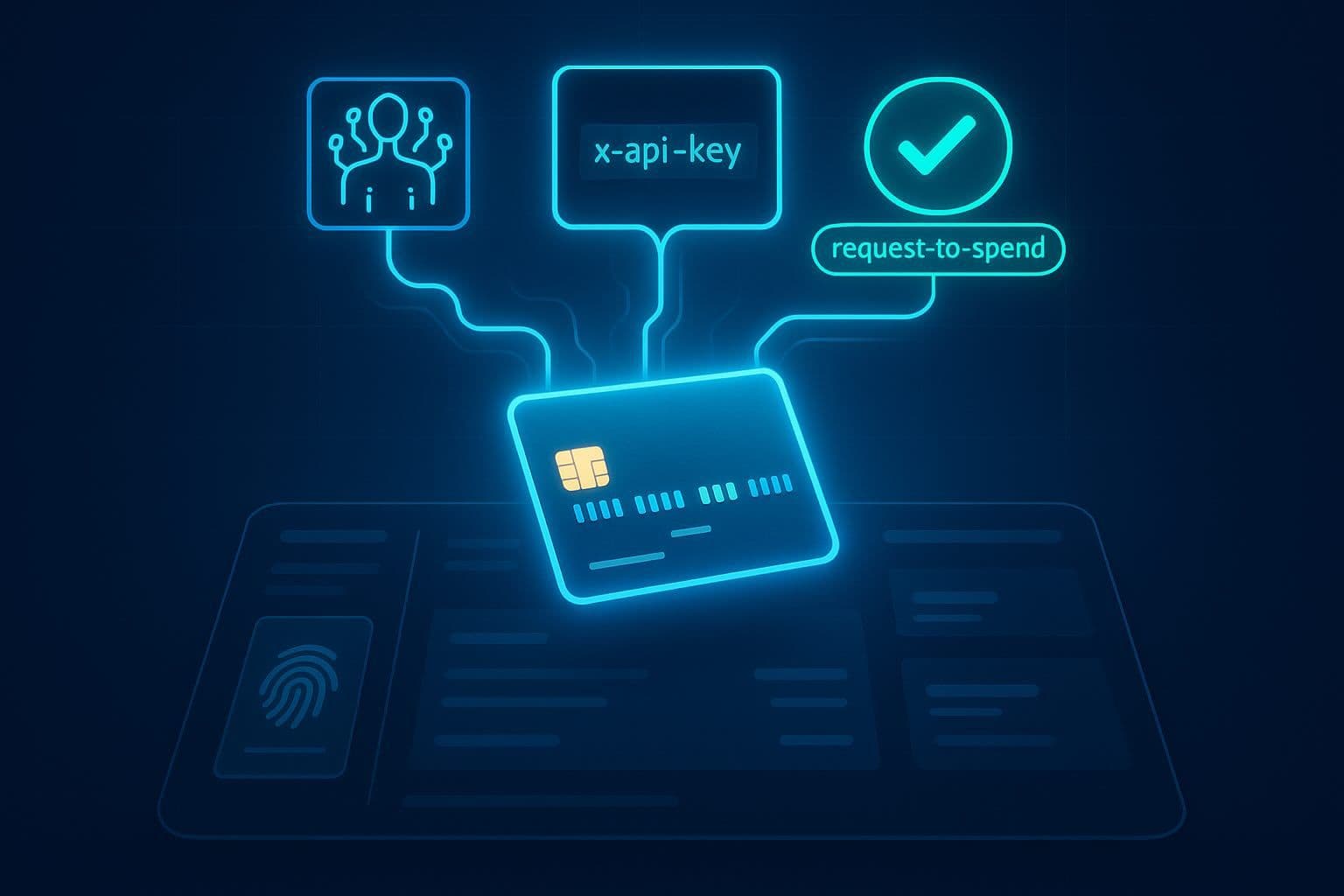
A growing number of startups now operate without a traditional finance team in the early stages. Founders use AI agents to handle support, infrastructure, procurement research, bookkeeping prep, and internal operations long before they hire dedicated ops staff. The problem with such a setup is that most traditional corporate cards were designed for manual finance workflows and personal-credit underwriting, which breaks down quickly for global founders, newly formed LLCs, or AI-driven operational setups.
That is why the “no personal credit check” category of business cards matters now than it did a few years ago. These cards underwrite against business cash balance, revenue, or funding history instead of founder FICO scores, making them accessible to recently incorporated startups, international founders with US entities, and venture-backed teams that need operational infrastructure immediately rather than after building personal credit history in the US.
Every card in this roundup skips the personal credit check. They require a US entity and EIN, and handle approval without touching your FICO score. What separates them is the integration surface: which cards expose a real API, which support programmatic spend controls, and which are built to work with AI agents from account creation onwards.
Why No-Credit-History Corporate Cards Work Differently in 2026
The underwriting model for these cards is structurally different from consumer credit. Personal credit cards look at your FICO score because they’re making a bet on your individual repayment behavior. These startup cards look at your business bank balance, revenue trajectory, or funding history instead, which means a two-month-old LLC with $200k in a business account can qualify when a sole proprietor with a 750 FICO score might not.
Most cards in this category are charge cards, which means you pay the full balance on a set schedule (daily, weekly, or monthly depending on the issuer and your tier). A secured credit card deposits collateral up front and builds a credit file over time. If your goal is operational spend management with real-time controls, the charge card model is what you want.
To qualify for any card in this list, you need a US-registered business entity (LLC, C-Corp, or S-Corp), an EIN, and a business bank account. Most issuers link that account via Plaid at signup. For non-US residents, forming a US LLC is the required first step, and several registered agent services handle this remotely.
One detail that surprises founders: Plaid’s role in these onboarding flows goes beyond bank account linking. For platforms like Meow, Plaid also handles KYC/KYB identity verification for the human beneficial owner, meaning PII flows through Plaid’s secure infrastructure and never touches any LLM provider.
What to Evaluate Before You Pick a No-Credit-Check Corporate Card
Six criteria actually matter for a technical team choosing their first corporate card with no credit history.
- Approval mechanics determine both your likelihood of approval and your timeline. Some cards require a specific bank balance (Mercury needs you banking with them). Others underwrite based on total funding raised (Brex). Meow links to any business bank account via Plaid and underwrites from there.
- Spend limit methodology matters for cash flow planning. Mercury ties your limit to your Mercury account balance and adjusts repayment terms at the $15k balance threshold. Divvy operates on a similar deposit model. Ramp scales limits dynamically based on business financial health.
- Cashback structure and relevant spend categories matter most when your monthly burn includes AWS, Azure, OpenAI API calls, and Vercel. Headline rates often have carve-outs on exactly the categories you spend the most, so checking the actual reward terms (not the marketing page) is worth the five minutes.
- Programmatic controls determine whether you can set per-card limits, approval workflows, and role-based permissions via API, or whether these controls are UI-only. For a technical team issuing cards to contractors or agents, the difference between a spend limit updated programmatically and one requiring a dashboard login is real.
- API or MCP surface for automation is a very important distinction in this comparison. An expense data export API, a card-issuance API, and an agentic MCP (Model Context Protocol) server are categorically different capabilities. Understand what you’re actually buying.
- Accounting integrations round out the evaluation. QuickBooks and Xero are standard at this point. NetSuite sync matters for teams using it as their ERP. Check whether sync is free or gated behind a paid tier before assuming it’s included.
The 8 Best Corporate Cards for Startups with No Credit Check
With all of that background and context in mind, let’s evaluate the 8 best corporate credit cards for startups!
1. Meow
Meow runs on partner bank infrastructure through Cross River Bank and Grasshopper Bank, N.A. (both FDIC members), and the corporate card is one piece of a full banking stack that includes ACH, wire, USDC payments on Ethereum, Base, Solana, and Arbitrum, plus USDT on Ethereum.
Approval requires a US entity and EIN, with your business bank account linked via Plaid at signup. There’s no annual fee and no personal credit check or founder guarantee. The current cashback schedule runs at 1.5% on most spend, with Anthropic and OpenAI earning 2.5%, and the usual carve-outs: AWS earns 0.5%, Apple and USPS earn 1.5%, and Walmart and Costco earn 0.01%. If your AI API spend runs through Anthropic or OpenAI directly, the 2.5% rate is genuinely strong. For other SaaS subscriptions and cloud vendors that fall into the general bucket, 1.5% is competitive but not exceptional. You get unlimited virtual and physical cards, each with configurable per-card spend limits (daily, weekly, monthly, and per-transaction).
The differentiator for technical founders is the MCP server. It connects to Claude, ChatGPT, Cursor, Gemini, Codex, VS Code, and any other MCP-compatible client. An AI agent can handle the entire account onboarding flow from a single prompt, using the /cli endpoint at https://mcp.meow.com/cli. For existing accounts, agents can use the server at https://mcp.meow.com.
The permission architecture is the key technical detail. Meow issues each agent its own scoped API key with one of three permission levels. Read-only lets the agent check balances, view transactions, and pull statements. Request-to-spend (the default) lets the agent prepare transactions including ACH, wire, and card spend, with each transaction entering a pending state that requires your approval in the Meow dashboard before it executes. Full autonomy is opt-in and lets the agent execute transactions independently within your configured parameters.
For multi-agent setups, each agent gets its own key with independent permissions on the same account. You can revoke any agent’s key immediately from the dashboard, with no waiting period.
The KYC flow is handled entirely through Plaid’s identity verification. The agent sends a Plaid KYC link to the human beneficial owner via text or email, the human completes verification through Plaid’s secure flow (SSN, driver’s license, selfie), and the agent receives confirmation once cleared. PII never touches any LLM provider.
Here’s how the agentic onboarding flow looks, from agent-initiated signup through to executing a supervised card spend request:

Approval takes 3 or more business days. So, make sure to plan accordingly if you need the card live for a specific spend deadline.
2. Brex
Brex is now part of Capital One Financial Corporation following the completion of Capital One’s acquisition in April 2026. Brex underwrites primarily against business financials including revenue, cash balance, and funding history rather than founder FICO scores, with no personal guarantee required for standard approvals. For venture-backed seed and Series A startups, the spending limits are often among the highest in this comparison.
Rewards are points-based and redeemable for travel, statement credit, cash back, partner credits, and other rewards.
The Brex API platform covers transactions, expenses, spend limits, virtual cards, payments, vendor management, team management, and reporting workflows. Brex also offers embedded payment capabilities for third-party software platforms. However, no MCP server or externally agent-oriented permission model is currently listed from Brex.
The Capital One acquisition changes part of the evaluation calculus for technical teams that build internal tooling around financial platforms. Teams with deeply integrated finance workflows should monitor roadmap direction, API continuity, and platform positioning as the Capital One integration matures.
3. Ramp
Ramp provides corporate cards with no personal guarantee and no founder credit check, underwriting primarily against business financials and operating cash flow. Spend limits scale dynamically based on company financial health and usage patterns. The tradeoff is that newly formed companies, high-burn startups, or teams that intentionally run with lower working-capital balances may not receive a sufficiently high limit at the outset, since Ramp’s business limit is tied to factors such as linked bank balance, industry, credit bureau data, and broader financial health.
Ramp offers a developer API that covers transactions, spend controls, reimbursements, accounting workflows, procurement data, and automation tooling. Ramp also operates an MCP server compatible with Claude, ChatGPT, and Cursor, alongside a dedicated agent interface for AI-assisted card and procurement workflows.
In April this year, Ramp expanded this further with a suite of procurement-focused AI agents covering vendor sourcing, contract analysis, policy compliance, and purchasing workflows. The platform’s AI surface is therefore broader than simple expense categorization or reporting automation.
Ramp’s integration ecosystem has 200+ integrations including QuickBooks, Xero, NetSuite, Sage Intacct, Slack, and various HR, ERP, and procurement systems.
Compared with Meow, Ramp’s automation model is centered around spend management and procurement orchestration rather than direct banking infrastructure. Ramp exposes an operational finance layer with AI-assisted workflows, while Meow extends agent access into banking primitives themselves, including ACH, wire transfers, stablecoin payments, and card operations from a unified MCP surface. Ramp may be more platform than a solo founder or small team needs if the immediate requirement is simple agent-controlled banking and card operations.
4. Mercury
Mercury offers 1.5% cashback on all spend, automatically deposited with no points conversion, and no annual fee. The credit limit scales with your total Mercury account balance. At balances below $15k, your balance repays daily, and at $15k and above, you unlock monthly repayment terms.
The Mercury card is available exclusively to Mercury account holders, so you’re adopting Mercury as your primary business banking layer to access it. QuickBooks and Xero sync are free. NetSuite sync requires a paid Mercury plan. Mercury has no MCP server and no documented card-issuance API.
Mercury provides a clean UX, a simple flat cashback rate, and solid accounting integrations without needing programmatic card controls, but only if you’re comfortable with Mercury as your banking layer.
5. Divvy (BILL)
Divvy, now operated as part of BILL, combines corporate cards, expense management, and budgeting into a unified spend-control platform aimed at SMBs and growing operations teams. Approval is based primarily on business financials, cash flow, and connected bank account data rather than founder credit scores, with no personal credit check required for most standard applications.
Divvy’s rewards model differs from flat cashback cards such as Mercury or Meow. Rewards are points-based and tied directly to repayment frequency: businesses that repay balances more frequently receive higher reward multipliers. The structure is designed to encourage tighter cash-flow discipline rather than maximize passive cashback yield.
The platform’s core strength is operational budget enforcement. Divvy allows finance and operations teams to create granular spend controls across departments, projects, teams, vendors, or cost centers, with real-time visibility into available budgets before transactions occur.
Divvy integrates with accounting platforms, including QuickBooks, Xero, NetSuite, Sage Intacct, and other ERP systems through BILL’s broader financial operations ecosystem. However, Divvy exposes a narrow developer surface. The platform focuses on workflow configuration through its UI and native integrations rather than programmable card issuance, spend-control APIs, or AI-agent-oriented financial automation.
Divvy prioritizes centralized budget governance and operational simplicity over custom engineering flexibility. If your roadmap includes building internal procurement systems, AI-assisted finance workflows, or programmable treasury tooling, Divvy is likely to feel restrictive.
6. Rho
Rho combines business banking, corporate cards, expense management, bill pay, treasury, invoicing, and accounting workflows in one finance platform. The Rho Corporate Card offers up to 1.5% cashback on qualifying spend, with no annual fee, platform fee, subscription fee, or per-card fee. Rho also says it does not currently require a personal guarantee, consumer credit report, or personal credit score pull. Instead, underwriting considers business-level factors such as revenue growth, spending patterns, and balance sheet liquidity.
Rho allows teams to issue physical and virtual cards, set card-level limits, assign accounting attributes, apply merchant controls, enable or disable international spend, and use virtual-card controls such as vendor locks, single-use cards, real-time limits, alerts, and auto-expiration. Rho’s virtual-card documentation separately notes up to 1.25% cashback on virtual-card spend, so the rewards rate may vary by card type and qualifying spend.
The platform also supports broader finance workflows beyond cards. Companies can use Rho for bill pay, expense management, vendor payments, domestic and international wires, ACH payments, treasury management, and cash-flow visibility. This gives Rho a more operational finance focus than card-first platforms that mainly center on spend controls and reimbursements.
Rho also connects with accounting and ERP systems, including QuickBooks, NetSuite, Xero, Sage Intacct, Campfire, and Puzzle. Its help documentation describes native integrations for NetSuite, QuickBooks Online, and Sage Intacct, while Xero is supported through bank feed connections.
Rho is less agent-native than platforms built specifically around AI-controlled finance workflows. It does not appear to offer a public Rho-owned MCP server for AI agents. Its automation story is centered on finance operations, spend controls, virtual cards, accounting integrations, and internal workflow efficiency rather than AI agents directly operating the finance stack.
7. Slash
Slash is a business finance platform built around corporate cards, business banking, treasury, working capital, stablecoin payments, invoicing, bill pay, expense management, accounting workflows, APIs, and AI agents. Slash advertises EIN-only approval with no personal guarantee and no personal credit check, though approval is still subject to business underwriting.
The Slash Corporate Card offers unlimited physical and virtual cards, employee card controls, merchant restrictions, spend limits, per-transaction limits, and up to 2% cashback. Slash also includes read and write API access with every account, so teams can programmatically create cards, check balances, edit limits, receive webhooks, reconcile payouts, and approve or decline transactions in real time.
Slash also has a public agent-native story. Slash for Agents exposes Slash through an MCP server, allowing compatible AI agents to discover API endpoints, inspect schemas, and call Slash APIs for actions such as creating cards, setting spending limits, sending payments, and checking balances. Its Slack-based assistant, Twin, can answer account questions, send transaction notifications, and place orders on connected services with role-based access and audit logs.
In April 2026, Slash launched Global Cards, which lets international businesses spend globally in USD without forming a U.S. entity or obtaining an EIN. Earlier that month, Slash also announced a $100M Series C at a $1.4B valuation.
8. Expensify Card
The Expensify Card is a corporate card built for teams already using Expensify for expense management. Its main value is workflow fit: card spend, receipts, approvals, reimbursements, bill pay, and accounting sync all stay inside the same platform.
Expensify supports smart limits, fixed limits, monthly limits, and virtual cards for specific purchases or subscriptions. Smart Limits refresh available spend as expenses are submitted and approved, which makes the card useful for teams with frequent employee expenses.
Rewards are not a flat 2%. Expensify says U.S. purchases earn 1% cashback, while 2% cashback requires at least $250,000 in monthly card spend.
The Expensify Web Services API is mainly for expense data, receipts, reports, transactions, and account provisioning. It is not a card-issuance API or MCP-based agent layer.
Comparison Matrix
| Card | Approval Basis | No Personal Guarantee | Cashback Rate | API / Programmatic Access | AI Agent Support | Key Accounting Integration |
|---|---|---|---|---|---|---|
Meow | US entity + EIN, with business bank account and identity verification handled through Plaid | Yes | 1.5% on most spend; 2.5% on Anthropic and OpenAI; lower rates for select merchants including AWS, Walmart, and Costco | Scoped API keys with agent-level permissions for balances, transactions, statements, card spend requests, ACH, wire, and stablecoin payments | Yes. Public MCP server with read-only, request-to-spend, and full-autonomy permission levels | Puzzle integration; QuickBooks support for invoicing/accounting workflows |
Brex | Business financials, including revenue, cash balance, and funding history | Yes, for standard approvals | Points-based rewards, with up to 7x in selected categories | Mature API covering transactions, expenses, spend limits, virtual cards, payments, vendor management, team management, and reporting | No public MCP server or agent-native permission model currently listed | NetSuite, QuickBooks, Sage Intacct, Xero, Oracle Fusion, Workday Financials, and Dynamics 365 Business Central |
Ramp | Business financials, operating cash flow, and company financial health | Yes | Up to 1.5% cashback, plus savings-focused rewards and perks | Mature API covering transactions, spend controls, reimbursements, accounting workflows, procurement data, and automation tooling | Yes. MCP server compatible with Claude, ChatGPT, and Cursor, plus AI-assisted card and procurement workflows | QuickBooks, Xero, NetSuite, Sage Intacct, Slack, HR, ERP, and procurement systems |
Mercury | Mercury account balance; available only to Mercury account holders | Yes | 1.5% cashback on credit card spend | No documented card-issuance API; card controls and accounting automations are primarily product-led rather than developer-led | No public MCP server | QuickBooks Online, Xero, and NetSuite |
Divvy (BILL) | Business financials, cash flow, and connected bank account data | Yes, for standard Divvy/BILL Spend & Expense approvals | Points-based rewards tied to repayment frequency | Primarily UI-configured budget controls, expense workflows, and native integrations; narrower developer surface than Brex, Ramp, Rho, or Slash | No public MCP server or agent-native finance layer | QuickBooks Online, NetSuite, Sage Intacct, and Xero/export-based workflows |
Rho | Business-level factors such as revenue growth, spending patterns, and balance sheet liquidity | Yes | Up to 1.5% cashback on qualifying corporate card spend; virtual-card rewards may vary by card type and terms | Physical and virtual card issuance, card-level limits, accounting attributes, merchant controls, international spend controls, vendor locks, single-use cards, alerts, and auto-expiration | No public Rho-owned MCP server currently listed | QuickBooks, NetSuite, Xero, Sage Intacct, Campfire, Puzzle, and other finance/HR integrations |
Slash | EIN-only approval advertised for U.S. businesses, subject to business underwriting; Global Cards can support international businesses without a U.S. entity | Yes | Up to 2% cashback | Read and write API access included; supports card creation, balance checks, limit edits, webhooks, reconciliation, and real-time transaction approval or decline | Yes. Slash for Agents exposes an MCP server; Twin assistant supports account questions, transaction notifications, connected-service ordering, RBAC, and audit logs | QuickBooks, Xero, and additional general-ledger/accounting workflows |
Expensify Card | Expensify workspace and business approval process; built for teams already managing expenses in Expensify | Yes | 1% cashback on U.S. purchases; 2% requires at least $250,000 in monthly card spend | Expensify Web Services API for expense data, receipts, reports, transactions, and account provisioning; not a card-issuance API | No MCP-based agent layer | QuickBooks Online, QuickBooks Desktop, Xero, NetSuite, Sage Intacct, and Workday |
If you’re a solo founder running agentic workflows with Claude Code, ChatGPT, Cursor, or VS Code, Meow is the strongest fit when you want an AI assistant to interact with business banking data through MCP rather than only export expenses after the fact.
Meow’s MCP server supports account access through Claude, Cursor, ChatGPT, VS Code, and other MCP-compatible clients, and its developer docs recommend OAuth or scoped API keys so teams can limit what an assistant can access.
Getting Your Meow Corporate Card: Exact Steps
- Go to meow.com and apply with your business information. If you’re a non-U.S. resident, confirm your entity structure before applying, since eligibility can depend on where and how the business is incorporated.
- Link your existing business bank account through the onboarding flow. This gives Meow the business financial context it needs for account setup and underwriting.
- Complete identity and business verification. The human beneficial owner should expect to complete the required compliance checks before the account is fully approved. Do not assume instant approval; budget several business days if you need the card live before a specific spend deadline.
- Once approved, log into the Meow dashboard, create an API key, and make your first API call against https://api.meow.com/v1:
1curl -H "x-api-key: YOUR_API_KEY" https://api.meow.com/v1/accountsFrequently Asked Questions
Can a startup with no credit history get a corporate card?
Yes. Every card in this list approves based on your business bank balance, revenue, or funding raised rather than your personal FICO score. A US-registered entity (LLC, C-Corp, or S-Corp) and an EIN are the baseline requirements. Most platforms link your business bank account via Plaid during signup and make an underwriting decision from there.
Do any of these cards require a personal guarantee?
All eight cards in this comparison offer no personal guarantee. The issuer assumes credit risk based on your business financials.
Which corporate card has the best API for startups building agentic workflows?
For agentic workflows, Meow provides the most complete surface: an MCP server supporting new account creation, scoped per-agent API keys with three permission levels (read-only, request-to-spend, and full autonomy), and OAuth 2.1 with PKCE for existing accounts.
What’s the difference between a charge card and a secured corporate card?
A charge card requires you to pay your full balance on a fixed schedule (daily, weekly, or monthly), with no revolving credit line and no interest. A secured card requires an upfront cash deposit as collateral, and the deposit typically equals your credit limit. All eight cards in this roundup follow the charge card model.
Can non-US founders get a startup corporate card with no credit check?
Most cards here require a US-registered business entity and EIN. Non-US residents can form a US LLC remotely through registered agent services and then apply. Meow accepts global incorporations that establish a US LLC structure. Slash’s Global Cards program, launched in April 2026, allows international businesses to spend in USD without a US entity at all.
Is it safe to give an AI agent access to a corporate card?
With the right permission architecture, yes. Meow’s request-to-spend permission level (the default for new agent keys) requires a human to approve every transaction in the dashboard before it executes. Full autonomy is opt-in. Each agent gets its own revocable API key, so you can cut access instantly without affecting other agents or the primary account.
No credit check, no annual fee, and your AI agent can connect on day one. Apply at meow.com.